From storybooks to satellites, algebra to origami, the 2026 Midwest STEM Conference once again proved that great STEM learning doesn’t require a big budget — just the right ideas and the right educators willing to try something new. 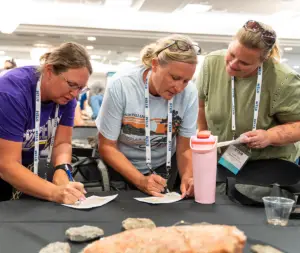
On July 28–29, more than 250 educators from across Missouri gathered at Missouri S&T in Rolla for two days of hands-on learning, fresh ideas, and connection. Co-hosted by the Missouri AfterSchool Network and the Kummer Center for STEM Education, the conference brought together school-day teachers, afterschool professionals, higher education partners, and community organizations around a common goal: making STEM education engaging and accessible for every learner.
The two days opened with laughter. This year’s keynote, Your Best School Year Ever, came from David Edward Garcia — a full-time teacher and stand-up comedian who blended humor with real talk about why teaching still matters. Drawing on research about how humor helps educators connect, cope, and keep going, Garcia sent the room into its first breakout sessions recharged and ready to dig in. “The keynote was fantastic this year!” one attendee said — and from there, the momentum never let up. 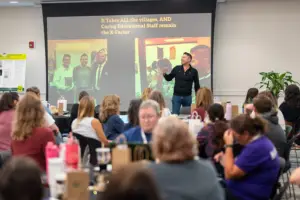
Sessions Built for Every Classroom and Program
Walking into any hallway during a breakout block, you found educators moving between more than 30 sessions, each one a different door into what STEM learning could look like. In one room, early childhood teachers turned favorite storybooks into hands-on engineering challenges, discovering that a picture book could be the start of a design problem.
Down the hall, a robotics classroom buzzed with the same energy that fuels student competition teams — leaders sharing how they build programs that keep students engaged season after season — while in another session, participants tested homemade “fishing devices” to rescue objects from tight spaces, laughing their way through an engineering challenge disguised as a game.
Elsewhere, educators were on their feet building algebra equations by hand, snapping together origami models that revealed the geometry hiding inside a simple fold, and examining rocks and minerals with a level of enthusiasm most people reserve for kindergarten. 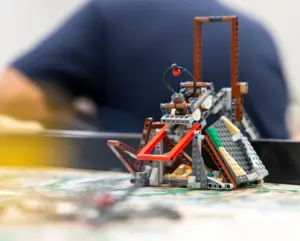
In the afternoon sessions, the conversation turned outward — toward the real-world students would inherit. Educators explored agriculture career pathways beyond the farm, toured the possibilities of Missouri S&T’s new Protoplex and its advanced manufacturing resources, and sat in on a roundtable reimagining how Missouri builds pathways for girls in STEM. Just down the corridor, another group dug into reducing plastic waste in their own cafeterias, and a session on local water and wastewater infrastructure connected classroom science to the pipes and treatment plants sitting just outside school doors. 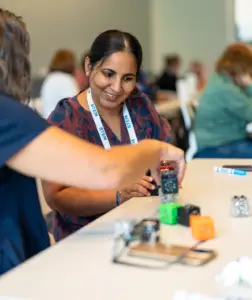
MASN’s own STEM Educator Richard Irwin facilitated science discovery — not lecturing about it, but living it, walking participants through hands-on activities and the kind of purposeful questioning that turns a simple activity into real discovery. What attendees remembered wasn’t just what he taught, but how he taught it. “I liked Richard’s session for his enthusiasm and the way he went over everything,” one attendee reflected. “You could tell he enjoyed it and wasn’t just ‘telling’ about it.” In a conference built on hands-on learning, Richard’s session was a reminder of what that phrase really means — not just materials in students’ hands, but genuine curiosity passed from one person to another.
Whatever the topic, one thing stayed constant: hands stayed busy. Attendees didn’t just listen — they built, tested, folded, and problem-solved their way through the two days.
A Sense of Belonging 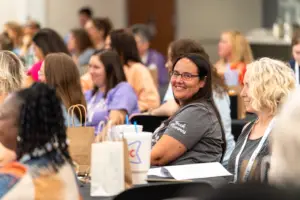
Talking to school day and out-of-school-time educators revealed a theme that went beyond any single workshop: connection. One attendee called the Midwest STEM Conference “encouraging, full of fresh ideas, and like-minded teachers.” “So many of us are ‘singletons’ in a building,” they added. “It’s encouraging to hear what others are doing and to recharge, and to know others are in the same boat.”
For others, that sense of belonging showed up in smaller moments — the enthusiasm of presenters and the service of the conference staff. That same generosity carried through to the conference itself: free to attend, close to home, and packed with sessions relevant to established and brand-new programs alike. Educators left with more than new ideas — they left with practical resources and peer connections, all without a dollar spent by their programs or school districts.
Interested in bringing STEM into your afterschool program? Explore MASN’s STEM resources or connect with the Kummer Center for STEM Education to learn more.